
Managing hair loss after hedgehog inhibitors for basal cell carcinoma
Authored by
Haley Neff
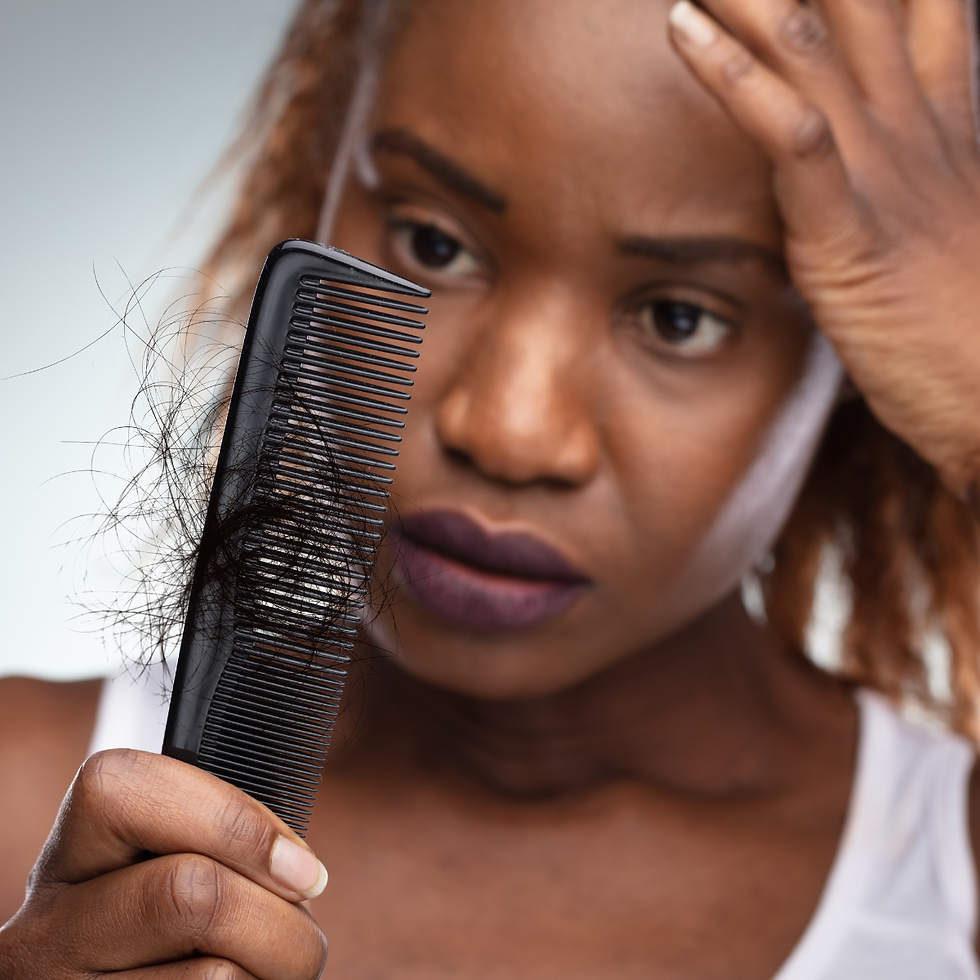
Advanced non-melanoma skin cancers that cannot be treated by surgery alone might be treated with infusions or chemotherapy agents.
For basal cell carcinoma, hedgehog inhibitors are first-line anti-cancer medications. These oral pills specifically target a mutation found in some basal cell carcinomas. Examples of this medication are vismodegib and sonetigib. Patients may have to take the medication for short periods or a long time, and one of the common side effects is hair loss.
How many patients experience hair loss on hedgehog inhibitors?
In major trials of the two medications, 49-66% of patients experienced hair loss, which was reported on average about 2.9 months after starting the medication.[1],[2]
The hair loss caused by hedgehog inhibitors is not painful, itchy or inflammatory.3 Unlike traditional chemotherapy, which attacks and harms hair follicles, the hair loss from hedgehog inhibitors is from a disrupted signaling process in the hairs that prevents hairs from entering the active growth cycle.[3]
Hair loss is typically gradual and involves thinning of the entire scalp. In one study specifically looking at hair loss, the amount of hair loss varied, with some patients experiencing <50% scalp involvement, some having mild but diffuse thinning, and others experiencing substantial hair loss.[4]
Will the hair grow back?
Hair loss from hedgehog inhibitors is reversible, but it is important to keep in mind that the process of hair regrowth is slow.[5]
What are some strategies for managing hair loss?
There are currently no known interventions to prevent hair loss from hedgehog inhibitor use.[6]Topical or oral minoxidil can be used during or after treatment to reduce diffuse hair loss and improve hair growth, though results may vary.2
Scalp cooling can be used for traditional chemotherapy to prevent hair loss during chemotherapy infusions but does not work with targeted drug therapy such as hedgehog inhibitors.[7]
Patients may opt to use scarves, handkerchiefs, or hats to style their hair after experiencing hair loss.
What about other skin cancers?
Hedgehog inhibitors are only FDA approved for basal cell carcinoma. Other non-melanoma skin cancers may be treated with immune checkpoint inhibitor infusions, which are less associated with hair loss.
Occasionally doctors may reach for more traditional chemotherapy agents, which can cause hair loss. For these medications, scalp cooling may be effective in reducing hair loss. Discuss with your cancer care team to determine whether this applies to your treatment.
Other information
Visit the American Cancer Society has information on scalp cooling for traditional chemotherapy, wigs for hair loss, or styling with scarves and hats.
References
[1] Gutzmer, Ralf et al. “Key Clinical Adverse Events in Patients with Advanced Basal Cell Carcinoma Treated with Sonidegib or Vismodegib: A Post Hoc Analysis.” Dermatology and therapy vol. 11,5 (2021): 1839-1849. doi:10.1007/s13555-021-00588-8
[2] Migden M, Farberg AS, Dummer R, Squittieri N, Hanke CW. A Review of Hedgehog Inhibitors Sonidegib and Vismodegib for Treatment of Advanced Basal Cell Carcinoma. J Drugs Dermatol. 2021;20(2):156-165. doi:10.36849/JDD.5657
[3] Janicki, Piotr et al. “Cutaneous Skin Toxicities of Oncological Targeted Therapies: Comprehensive Overview of Mechanisms, Management, and Research Gaps-A Narrative Review.” Dermatology and therapy vol. 16,4 (2026): 1847-1868. doi:10.1007/s13555-026-01693-2
[4] Villani, Alessia et al. “Hair Loss in Patients Treated with Vismodegib: A Single-Center Retrospective Study.” Skin appendage disorders vol. 6,5 (2020): 280-282. doi:10.1159/000508825
[5] Cantelli, Mariateresa et al. “Vismodegib-Induced Alopecia: Trichoscopic and Confocal Microscopy Evaluation.” Skin appendage disorders vol. 6,6 (2020): 384-388. doi:10.1159/000510121
[6] Janicki, Piotr et al. “Cutaneous Skin Toxicities of Oncological Targeted Therapies: Comprehensive Overview of Mechanisms, Management, and Research Gaps-A Narrative Review.” Dermatology and therapy vol. 16,4 (2026): 1847-1868. doi:10.1007/s13555-026-01693-2
[7]American Society of Clinical Oncology (ASCO). “Cold Caps and Scalp Cooling.” American Cancer Society. (2026).